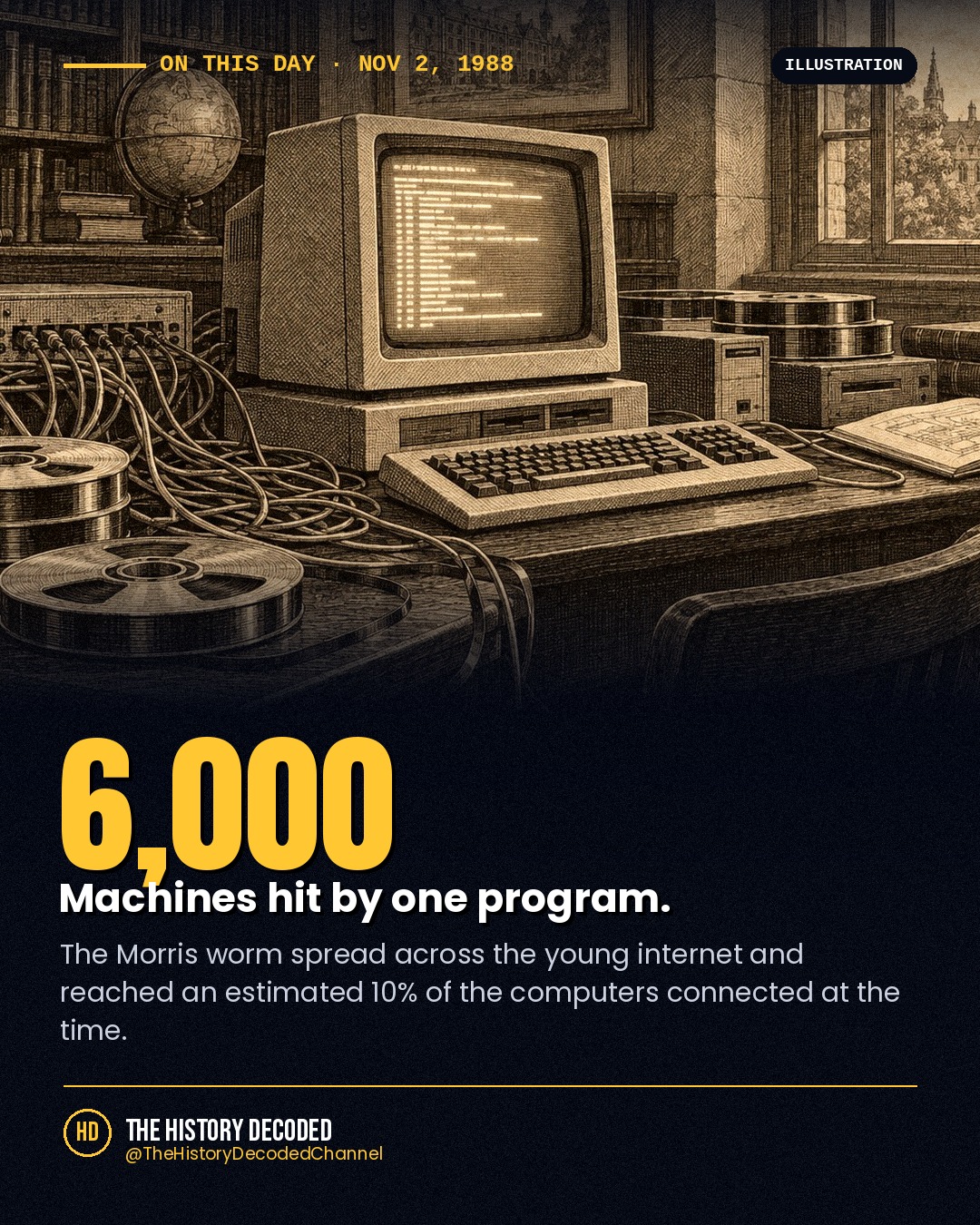
On the evening of November 2, 1988, a program began copying itself across the young internet. By the next morning, universities and research labs were cutting their connections to stop it.
It was written by Robert Tappan Morris, a Cornell graduate student. It got in through holes in the sendmail and finger services and by guessing weak passwords. It was meant to check for copies of itself, but often reinstalled itself anyway, and overloaded machines slowed down and crashed.
Estimates say about 6,000 machines were hit, roughly 10% of the computers connected at the time. Morris became the first person convicted under the 1986 Computer Fraud and Abuse Act, and received probation, 400 hours of community service and a fine of more than $10,000.
Should the first big hack have been treated as a crime or as a warning?
Instagram: @thehistorydecodedchannel_ · X: @TheHistoryDecod
#TheHistoryDecodedChannel